What Every Collector Should Know
You do not need a geology degree to make informed decisions about authenticated
meteorite specimens — but you do need a clear framework. The market for classified
meteorites is genuinely international, scientifically documented, and more structured
than most newcomers expect. The Meteoritical Bulletin, maintained by the Meteoritical
Society, records every formally classified specimen with its type, find or fall
location, mass, and classification status. That public registry is the foundation on
which every credible provenance claim in this niche is built. When you understand how
classification works, what provenance documentation should include, and which factors
drive comparative valuation, you are equipped to ask the right questions of any seller,
assessor, or specialist you work with. That is the purpose of this page — to give you a
working reference for the concepts that matter most. None of this constitutes financial
advice. Collecting authenticated meteorites carries real uncertainty: values fluctuate,
market interest evolves, and no specimen's past collector demand predicts its future
standing. What a sound knowledge base gives you is the ability to distinguish a
well-documented specimen from a poorly documented one — and that distinction is where
informed collecting begins. Past performance does not guarantee future results.
The scientific and documentary foundations of the collector market
The Basics
Every meteorite that reaches the collector market began its journey as debris from
the early solar system — fragments of asteroids, and in rarer cases the Moon or
Mars, that survived atmospheric entry and were recovered on Earth. The international
meteoritical community classifies recovered specimens by their mineralogical
composition, structural characteristics, and chemical group, assigning each a formal
designation recorded in a public registry. That classification is not an opinion —
it is a scientific determination made against established criteria and, in the case
of significant specimens, peer-reviewed. For collectors, classification matters
because it determines rarity context. A common H5 ordinary chondrite belongs to one
of the most frequently recovered meteorite groups. A lunar anorthositic breccia
belongs to a category with a globally documented count that can be measured in
dozens of known specimens. The difference between those two rarity profiles is
verifiable through public records, which is what distinguishes the meteorite niche
from many other alternative collectible categories where scarcity is asserted rather
than documented. Understanding the basic classification hierarchy — from the broad
divisions of stony, iron, and stony-iron through to specific chemical groups and
petrologic types — gives you the vocabulary to read assessment reports critically
and to verify claims independently. The sections below provide a working reference
for each major category and the documentation standards that apply to them.

Provenance: The Collector's Foundation
Provenance is the documented chain of custody that connects a meteorite specimen to
its verified origin — whether a witnessed fall with official recovery records or a
find registered with a recognised classification authority. For collectors,
provenance documentation is the single most important factor in establishing a
specimen's credibility, because it is the one element that cannot be
reconstructed after the fact if it was not maintained from the outset.
A complete provenance record typically includes the find or fall location and date,
the name of the finder or recovery institution, any prior ownership history, and the
formal classification entry in the Meteoritical Bulletin. Gaps in this chain should
always be identified explicitly in any assessment report — and their presence does
not automatically disqualify a specimen, but it does change the evidential basis on
which any valuation context is prepared.

Valuation in this niche is not a single number — it is a picture built from multiple documented factors, each of which can be assessed independently against verifiable data
Understanding Valuation Context in the Meteorite Collector Market
Experienced collectors and specialist assessors approach meteorite valuation through a
structured comparison of documented factors rather than a single subjective estimate.
Understanding those factors allows you to interrogate any valuation context you receive —
and to recognise when a figure has been arrived at through rigorous comparison versus
informal impression.
Classification type and rarity index are the primary drivers of comparative value in the
authenticated meteorite market. Specimens belonging to rare classification categories —
such as lunar achondrites, martian meteorites, or uncommon iron chemical groups —
command different collector interest than common chondrite types, all else being equal.
Rarity is expressed through the documented global count of classified specimens in a
given category, which is publicly verifiable through the Meteoritical Bulletin and
related institutional sources.
Specimen mass and physical integrity are the next significant factors. Larger specimens
of a given classification type are generally rarer than smaller examples, though this
relationship is not linear and depends on the specific fall or find context. Physical
integrity covers the completeness of the specimen, the preservation of the fusion crust
— the glassy outer layer formed during atmospheric entry — and the weathering grade,
which reflects the degree of terrestrial alteration the specimen has undergone since
landing.
Provenance completeness directly affects the confidence level of any valuation context.
A specimen with a full, unbroken chain of custody from a witnessed fall, registered with
a classification authority and documented in the Meteoritical Bulletin, occupies a
stronger evidential position than a find specimen with partial documentation. This
difference is reflected in how comparative market data is applied and in the explicit
assumptions stated in a responsible assessment report.
Comparative market data draws on auction results, dealer pricing, and institutional
acquisition records from the broader collector community. This data is directional
rather than definitive — it provides context for where similar specimens have
transacted, not a guarantee of where any individual specimen will trade. Values in this
niche fluctuate with collector demand, scientific interest, and the general availability
of comparable specimens. Past market data does not predict future outcomes, and all
valuation context should be understood as a snapshot rather than a fixed reference.
The four major meteorite categories each carry distinct scientific characteristics, rarity profiles, and documentation standards that shape how specimens are assessed and compared within the collector community
Meteorites are divided into three broad structural classes — stony, iron, and stony-iron — with stony meteorites further divided into chondrites and achondrites. Within each category, chemical groups and petrologic types provide the granular classification that determines rarity context and collector standing.
Classification Categories: A Working Reference for Collectors Exploring the Meteorite Market
Meteorites are divided into three broad structural classes — stony, iron, and stony-iron — with stony meteorites further divided into chondrites and achondrites. Within each category, chemical groups and petrologic types provide the granular classification that determines rarity context and collector standing.
- Chondrites are the most abundant meteorite type by recovered count, making up the large majority of all classified specimens. They are distinguished by the presence of chondrules — small spherical structures that formed in the early solar nebula before any planetary body existed. Within the chondrite category, ordinary chondrites are the most common, while carbonaceous chondrites represent a scientifically significant and relatively rarer sub-group. Petrologic type, ranging from one to six, reflects the degree of thermal and aqueous alteration a specimen has undergone — a factor relevant to both scientific classification and condition assessment.
- Achondrites are stony meteorites that lack chondrules, originating from differentiated parent bodies where geological processing has occurred. This category includes the most sought-after specimen types in the collector market: lunar achondrites, derived from the Moon, and martian meteorites, derived from Mars. Both sub-groups have globally documented classification counts verifiable through public registries. The scientific significance of these specimens, combined with their limited global supply, places them at a distinct point in the rarity spectrum — though values in this category, as in all others, are subject to market fluctuation.
- Iron meteorites originate from the metallic cores of early differentiated planetesimals. They are classified by chemical group — based on trace element ratios — and by structural type, which reflects the size of the Widmanstätten crystalline pattern visible when a specimen is cut and etched. This pattern, formed over millions of years of slow cooling, is a structural feature that can be scientifically verified and is directly relevant to both classification and collector interest. Condition factors for iron meteorites include the quality of the Widmanstätten pattern, surface oxidation, and the preservation of any fusion crust.
- Stony-iron meteorites represent the rarest of the three structural classes by recovered count. This category includes pallasites — which display translucent olivine crystals embedded in an iron-nickel matrix — and mesosiderites, which have a more heterogeneous structure. Pallasites in particular occupy a distinctive position in the collector market because of their visual character and their documented rarity. Condition grading for pallasite specimens places significant weight on the integrity of the olivine crystals, which can degrade with terrestrial weathering if specimens are not properly stored and handled.

Chondrite: Most Common Type
chondrite stony meteorite specimen surface detail
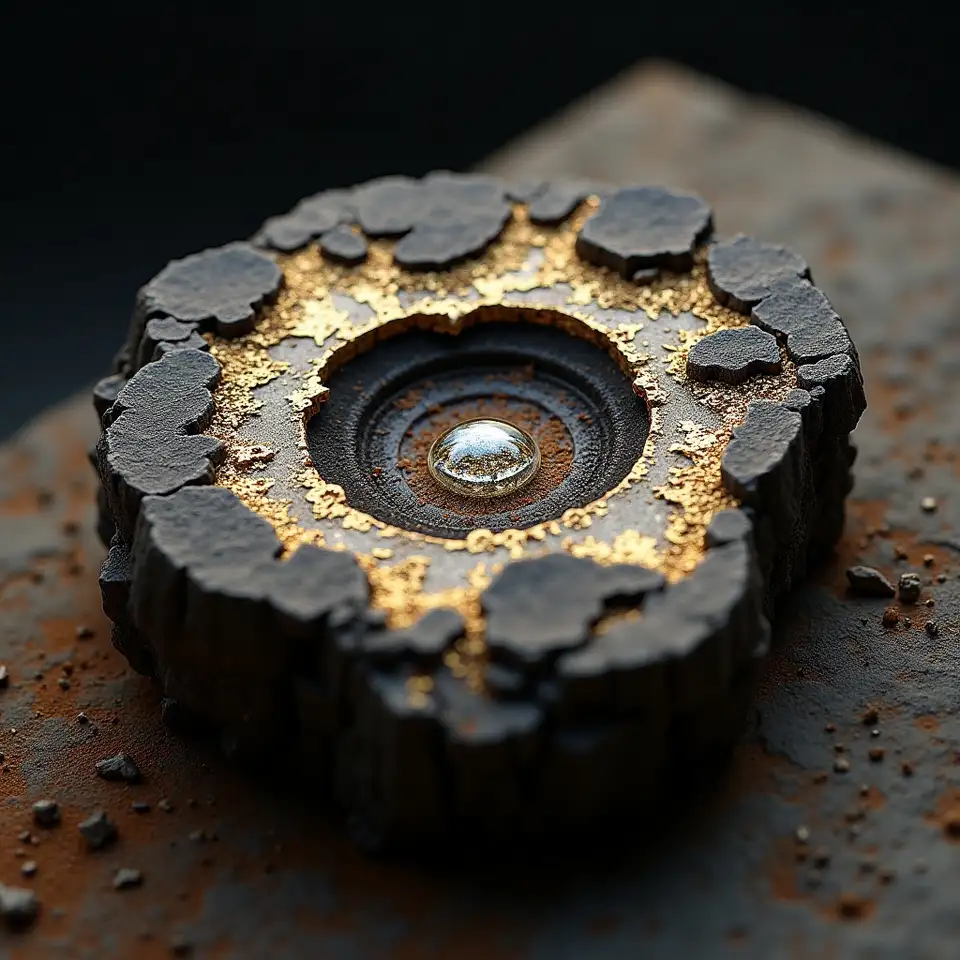
Iron: Core Fragment Pattern

Pallasite: Rarest Structural Class
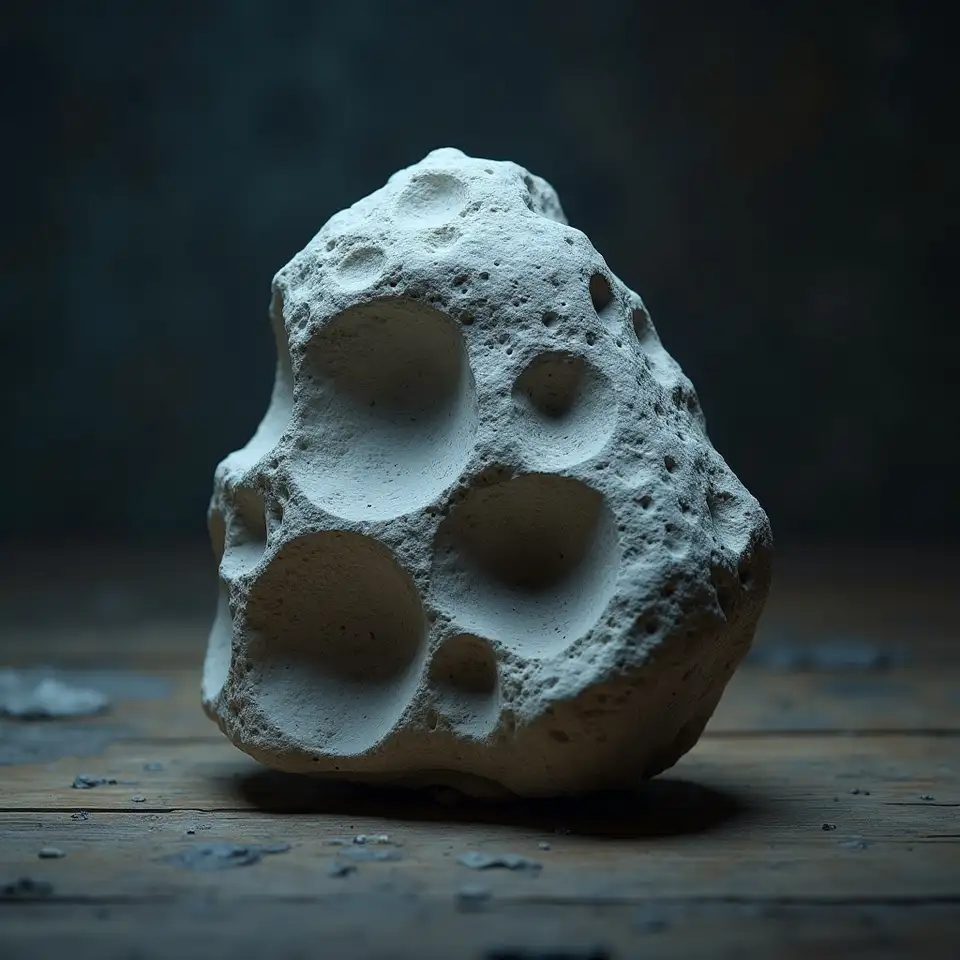
Lunar Achondrite: Documented Rarity

Ready to Explore a Specimen?
Bring a specific classification question, a provenance document, or a specimen you want assessed through our three-step pathway.
You now have a working reference for the classification categories, provenance standards, and valuation factors that matter in the authenticated meteorite collector market. The next step is to apply that framework to a specific specimen or question. Our Provenance-to-Classification Pathway begins with a direct conversation about what you are working with — the specimen type, the documentation available, and the level of assessment that is appropriate to your situation. There is no generic starting point. Every engagement begins with the specifics of your enquiry. Collecting authenticated meteorites carries real uncertainty, and values can move in either direction. Past performance does not guarantee future results. What we offer is a clearer, more evidenced foundation for every decision you make in this niche.
Get in Touch